
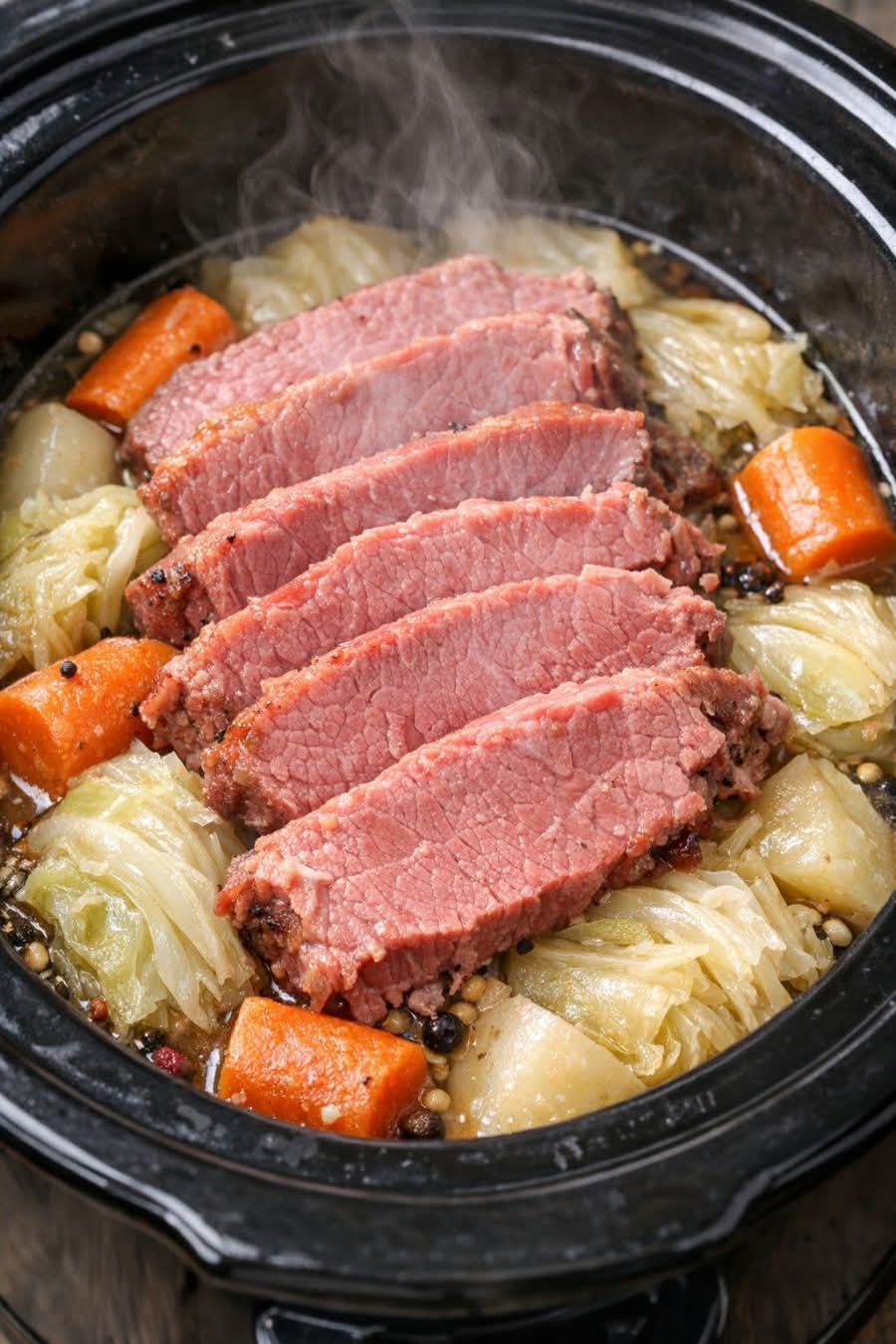
Every March, without fail, my grandpa would haul out the old slow cooker and declare that there was only one proper way to celebrate: a pot of corned beef and cabbage so tender it practically fell apart when you looked at it. Out here in the rural Midwest, this dish is as much about tradition as it is about supper. It’s a simple, four-ingredient, no-fuss recipe that lets the corned beef brisket do all the talking—slowly braised with its own pickling spices, nestled over sweet carrots and cabbage until everything is soft, flavorful, and swimming in a clear, savory broth. If you want that classic, fork-tender St. Patrick’s Day meal without cluttering things up, this is the way my family has sworn by for generations.
Ladle the corned beef, cabbage, and carrots straight from the slow cooker into warm bowls, making sure each serving gets a good splash of the cooking broth. Serve with thick slices of buttered rye or crusty farmhouse bread to soak up the juices. A spoonful of grainy mustard or prepared horseradish on the side is all you need for a little kick. If you want to stretch the meal, simple boiled or mashed potatoes pair beautifully, but it’s just as satisfying on its own as a hearty one-pot supper.
Ingredients
3 to 4 pounds corned beef brisket with seasoning packet
1 medium head green cabbage, cut into thick wedges
6 medium carrots, peeled and cut into 2-inch chunks
4 cups water
Directions
Place the carrot chunks in an even layer on the bottom of a large slow cooker. This creates a bed that keeps the meat slightly elevated and lets the vegetables soak up the flavorful juices.
Arrange the cabbage wedges on top of the carrots, packing them in gently so they stay mostly upright and intact while cooking.
Set the corned beef brisket on top of the cabbage, fat side up. Sprinkle the entire contents of the seasoning packet (the pickling spices that come with the meat) evenly over the brisket and vegetables.
Pour the water around the sides of the brisket into the slow cooker, being careful not to wash off the seasoning on top. The liquid should come most of the way up the sides of the meat but does not need to cover it completely.