
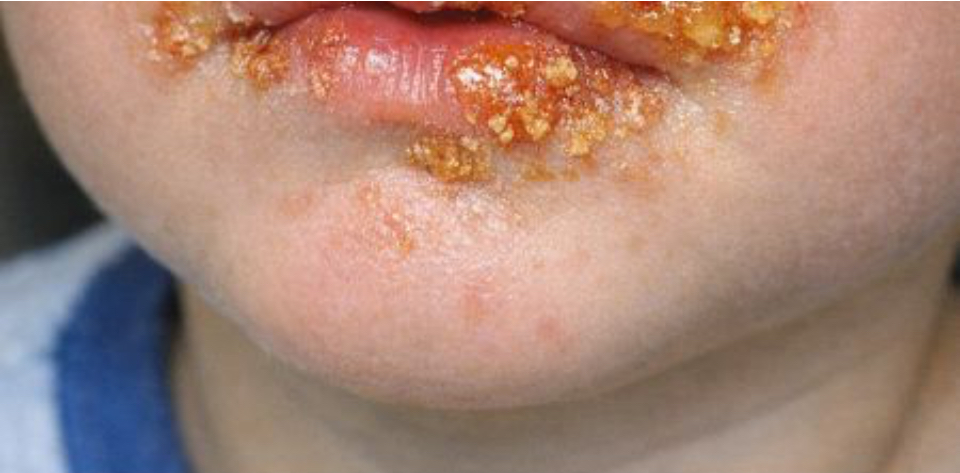
Crusty sores around a toddler’s mouth that appear quickly overnight are very commonly something called impetigo, which is a mild but contagious bacterial skin infection.
I can’t diagnose your child online, but I can help you understand what it might be and what you can safely do until you’re able to see a pediatrician.
What It Might Be
1️⃣ Impetigo (Very Common in Toddlers)
Impetigo often:
-
Starts as small red spots or blisters
-
Quickly turns into honey-colored crusty sores
-
Appears around the mouth and nose
-
Spreads easily by touching
It can show up fast — sometimes literally overnight.
2️⃣ Cold Sores (Less Common in Toddlers, but Possible)
-
Usually small fluid-filled blisters
-
Often painful
-
Caused by a virus (HSV)
3️⃣ Irritation or Drool Rash
If your toddler drools a lot (teething, pacifier use), saliva irritation can sometimes crack the skin — but it usually doesn’t form thick yellow crusts like impetigo.
What You Can Safely Do Right Now
If it looks crusty and yellowish:
✔️ Gently Clean the Area
-
Use warm water and mild soap.
-
Soften crusts gently — don’t scrub hard.
-
Pat dry with a clean towel.
✔️ Apply a Thin Layer of:
-
Over-the-counter antibiotic ointment (like bacitracin or triple antibiotic)
-
Or plain petroleum jelly to protect the skin
Apply 2–3 times daily after cleaning.
✔️ Keep Hands Clean
-
Wash your child’s hands often.
-
Trim fingernails short to prevent scratching.
-
Avoid sharing towels, washcloths, or pillows.
When You Should Seek Urgent Care
Go to urgent care or same-day clinic if you notice:
-
Fever
-
Rapid spreading
-
Swelling around the eyes
-
Pus or worsening redness
-
Your toddler seems very uncomfortable or lethargic
Impetigo often requires a prescription antibiotic ointment (like mupirocin), and sometimes oral antibiotics if it spreads.
You do NOT need to wait weeks if it looks like it’s spreading — urgent care clinics can treat this quickly.
Important: Avoid These
-
❌ Don’t use steroid creams unless prescribed
-
❌ Don’t use essential oils
-
❌ Don’t pick or peel crusts
Is It Contagious?
If it’s impetigo, yes — but once treated with antibiotics for 24 hours, children are usually no longer contagious.
If you’d like, you can describe:
-
The color of the crust
-
Whether there are blisters
-
If your toddler has a fever
And I can help you think through it more carefully.
You’re doing the right thing by checking. These things look scary, but they’re usually very treatable.